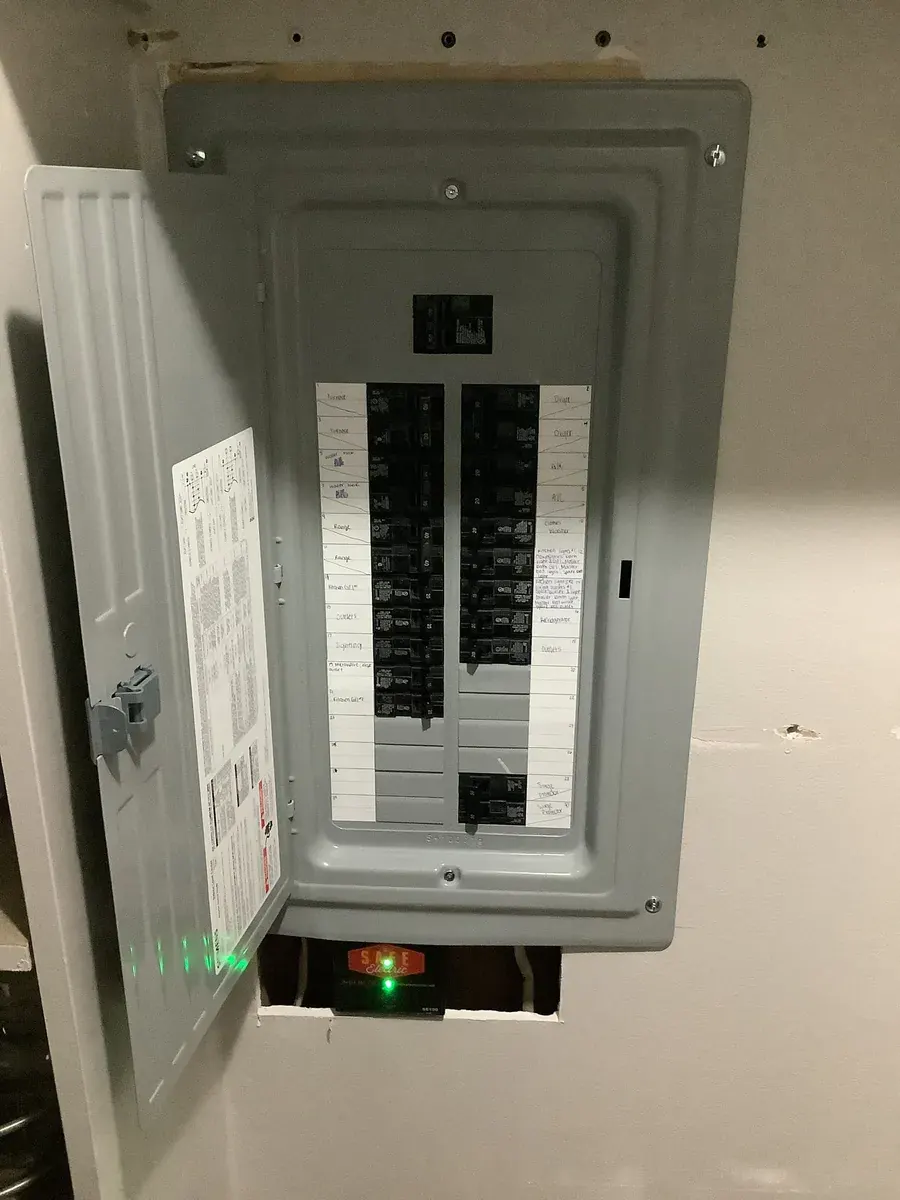
What's the Best Location for Your Electrical Panel?
NEC code sets the rules. Here's what every Columbus homeowner should understand before installing or moving a panel.
“Tyson was the best! He was on time and took his time to make sure everything was correct and to explain everything to me. …”
NEC Code Rules for Panel Placement
A residential electrical panel installation must be carefully considered. The National Electrical Code determines where to place this panel, and the requirements exist for one reason: electrical safety. Whether you are building a new home or need to move an existing breaker panel, knowing the code before work begins saves time, money, and the headache of a failed inspection.
At Safe Electric & Plumbing, we have been installing and relocating panels in Columbus-area homes since 1994. We know these requirements inside out, but we also believe you should understand the basics. It's your home, and a well-informed homeowner makes better decisions.

Written by
Matt Wehrle · Owner, Safe Electric & Plumbing & Plumbing
NEC Code Requirements for Panel Locations
Where Electrical Panels Cannot Go
These locations are explicitly prohibited under current National Electrical Code, no exceptions.
Closets
Panels may not be installed inside bedroom, linen, or general storage closets. This was common practice decades ago and is now a code violation in every jurisdiction.
Behind Appliances
A panel placed behind a refrigerator, stove, or other large appliance fails code. The appliance blocks the required clearance in front of the panel.
Pantries and Small Storage Rooms
Rooms used for food storage or small household supplies are prohibited. The NEC treats these as occupied spaces where electrical panel access creates a hazard.
Greenhouses
High humidity environments like greenhouses are explicitly prohibited. Moisture and electrical panels are a dangerous combination, and the NEC reflects that.
Cubbies and Recessed Spaces
A panel tucked into a built-in cubby typically cannot meet clearance requirements. If it can't be accessed freely, it can't be approved.
Under Stairs (with exceptions)
Panels may be installed under stairs only if the space provides at least 6'5" of head clearance. Without that clearance, the location is prohibited.
Electrical Panel Clearance Requirements
These three measurements determine whether a panel installation passes inspection.
Height Off the Ground
The panel must be mounted so its center is at least four feet off the ground. This keeps the panel out of reach of standing water and provides working access for an electrician.
Maximum Breaker Handle Height
The center grip handle of the highest circuit breaker must sit no more than 6'7" from the floor. A panel mounted too high forces the occupant to reach above a safe operating height.
Side and Surrounding Clearance
A minimum of 30" of clearance is required around the panel, this means no shelving, no water heater, no obstructions of any kind within that zone.
Working Space in Front
At least three feet of open workspace must exist directly in front of the panel. This ensures an electrician can work safely without being crowded.
Door Swing Clearance
The panel door must be able to open a full 90 degrees. If a wall, pipe, or fixture blocks the swing, the installation does not comply, even if all other measurements are met.
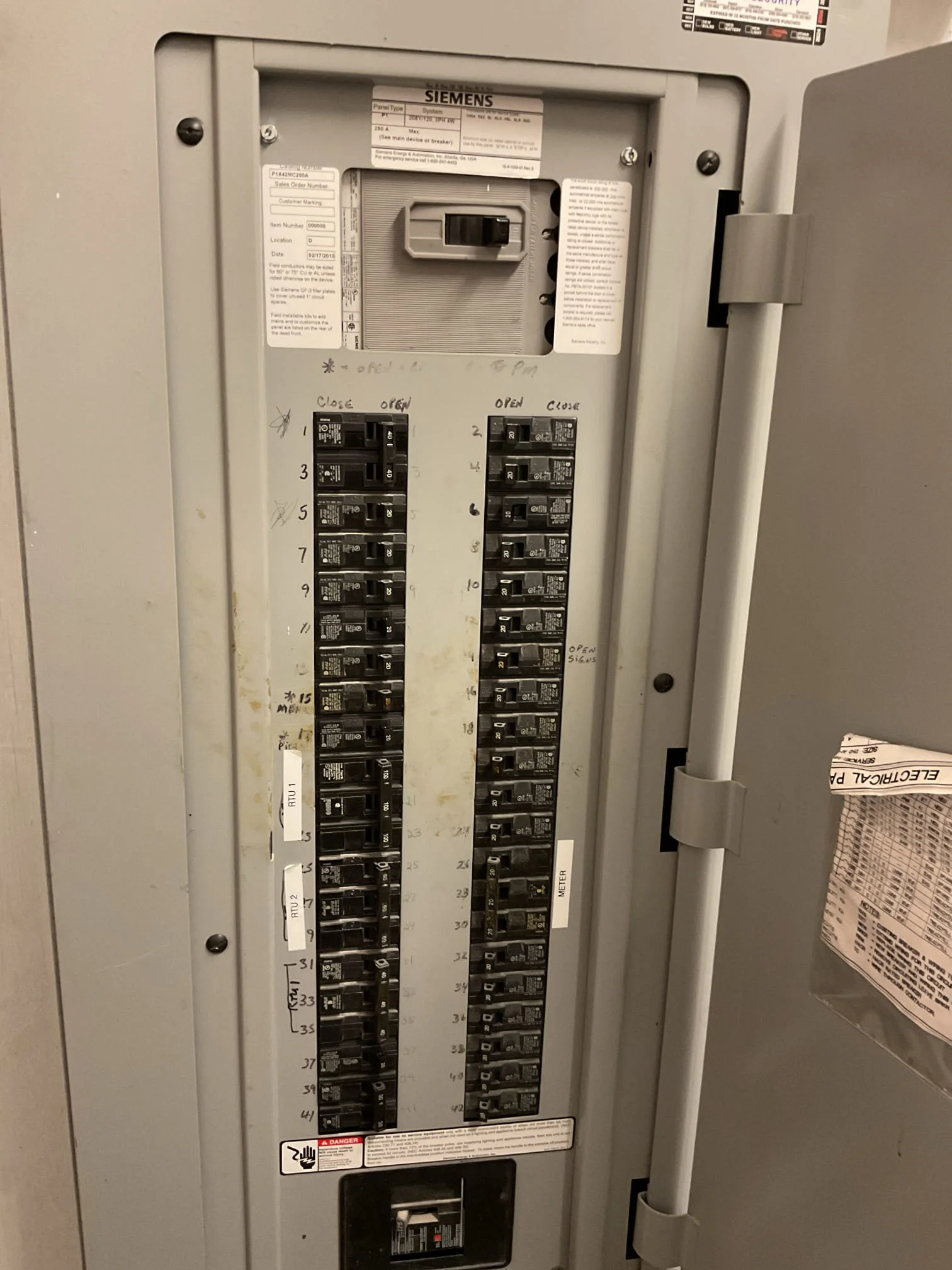
Where Are Electrical Panels Typically Located?
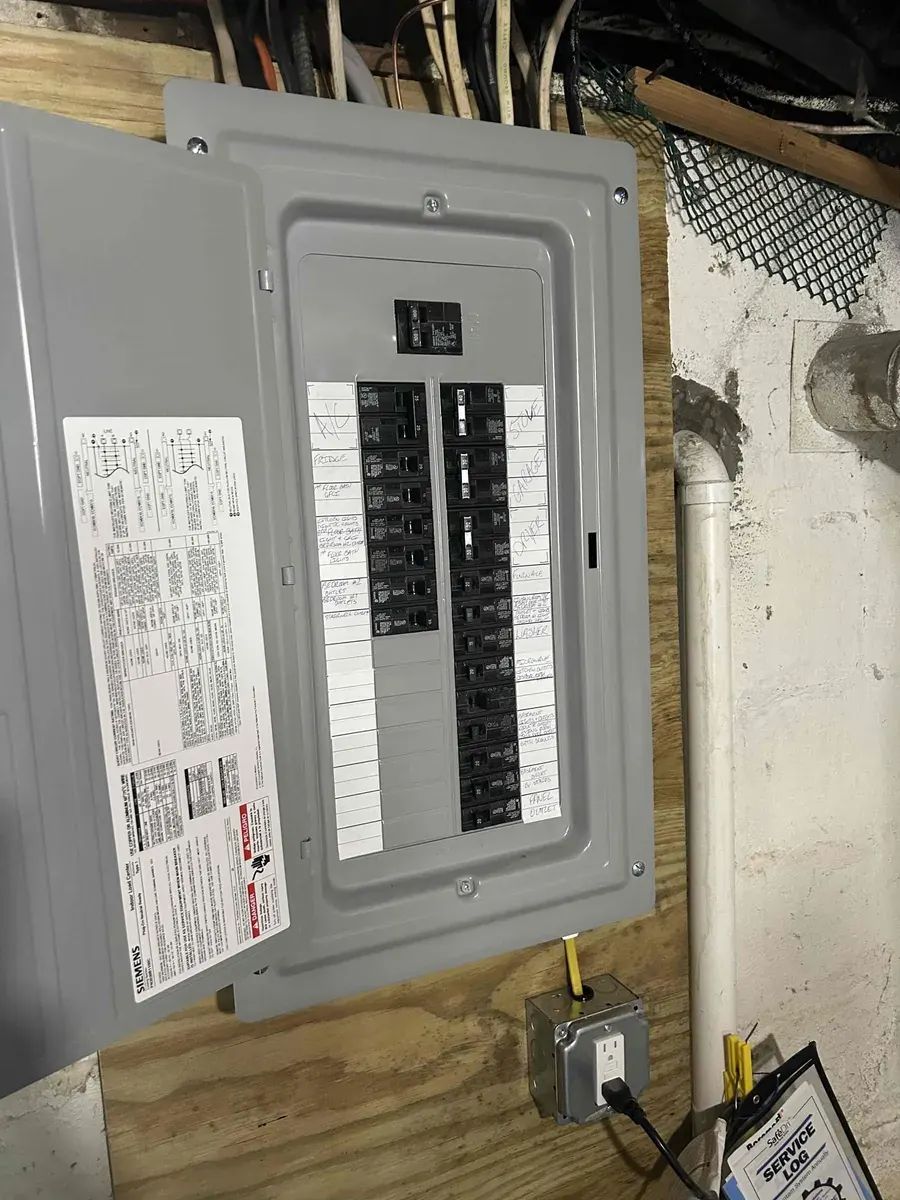
Choosing the Right Spot: What Our Electricians Look For
Four factors our team evaluates before recommending a panel location.
Clearance that works now and later
We check not just current obstructions but how the space is likely to be used. A basement panel location that meets code today should still meet code after shelving goes up.
Moisture and humidity levels
Panels must be kept away from areas prone to high humidity or standing water. A garage with a floor drain or a basement corner near a foundation crack may require a different location.
Proximity to the service entrance
The shorter the run from the utility service entrance to the panel, the simpler and more cost-effective the installation. Our electricians factor this in when evaluating multiple candidate locations.
Local permit and inspection requirements
Columbus-area inspectors apply NEC standards alongside local amendments. We know what the local jurisdiction expects and can flag any location that may create friction during inspection.
Panel Questions? Call Safe Electric & Plumbing.
Whether you are building new, relocating a breaker box, or aren't sure if your current panel location is code-compliant, we can help. Our electricians have been navigating NEC requirements in Columbus-area homes since 1994.
Call (614) 267-4111