
Mon–Sun: 12 AM–11:30 PM Serving Columbus since 1994

Sump Pump Installation in Columbus

Licensed plumbers serving Central Ohio since 1994, backed by 2,962 Google reviews.
Sump Pump Installation in Columbus

Get in touch

Call, text, or schedule online

★★★★★
“Austin Christopher was amazing and fixed a major power issue in our ancient house. …”
Kyng F. · Google review

Columbus Sump Pump Installation That Protects Basements

Sump pump installation in Columbus is one of the most practical things a homeowner can do to protect their basement, and Safe Electric & Plumbing has been doing this work across Central Ohio since 1994. Columbus sits on dense clay soil that drains poorly, and the water table in many neighborhoods runs high enough that a basement without a working pump is a basement waiting to flood. Our licensed plumbers handle full installations, from digging or inspecting the sump pit to routing the discharge line away from your foundation. 4.9 stars across 2,962 Google reviews. Call (614) 267-4111 and we'll talk through what your home needs.

The cost of sump pump installation depends on several factors: whether a pit already exists, the pump type you choose, how far the discharge line needs to run, and whether a battery backup system makes sense for your situation. Jobs on the simpler end involve dropping a submersible pump into an existing pit with a straightforward discharge path. More involved installs include cutting a new pit, routing discharge around obstacles, or adding a backup pump for storm season. Because the range is wide, we won't quote a number here that doesn't reflect your actual home. Every job is different -- contact Safe Electric & Plumbing for an accurate estimate.

Submersible vs. Pedestal: Which One Fits Columbus Homes

Most Columbus homes are better served by one type than the other.

Submersible Pumps

Submersible units sit inside the pit, submerged in water, with a sealed motor that runs cooler and quieter than a pedestal. They handle higher water volumes and are the better choice for most Columbus basements that see significant spring runoff or snowmelt. The motor is protected from the humidity in the pit, and the sealed housing makes them harder to damage accidentally.

Pedestal Pumps

Pedestal pumps mount the motor above the pit on a vertical shaft. They're easier to access for maintenance and tend to cost less upfront. They're worth considering when pit depth is limited or when a homeowner needs a budget-friendly solution for a basement that floods only occasionally. They're louder and don't move water as fast, but they're reliable when sized right.

Pump Sizing for Central Ohio

Clay soil and a high water table mean Columbus pumps work harder than pumps in cities with sandier ground. An undersized pump runs constantly and burns out early. Our plumbers assess the inflow rate your pit sees during a heavy rain event before recommending a horsepower rating, not just the cheapest model that fits the hole.

What Sump Pump Installation Looks Like Start to Finish

  1. Assess and Size

    We inspect your basement, check the existing pit if there is one, evaluate the soil and water table conditions for your property, and determine the correct pump capacity. Columbus clay holds water differently than loamy suburban lots, so sizing matters.

  2. Install the Pump and Pit

    If no pit exists, we cut one to the proper depth and diameter per local code. We set the pump, connect the float switch, and test the trigger depth so the pump activates before water reaches the slab. We also confirm the check valve is properly placed to prevent backflow.

  3. Route the Discharge Line

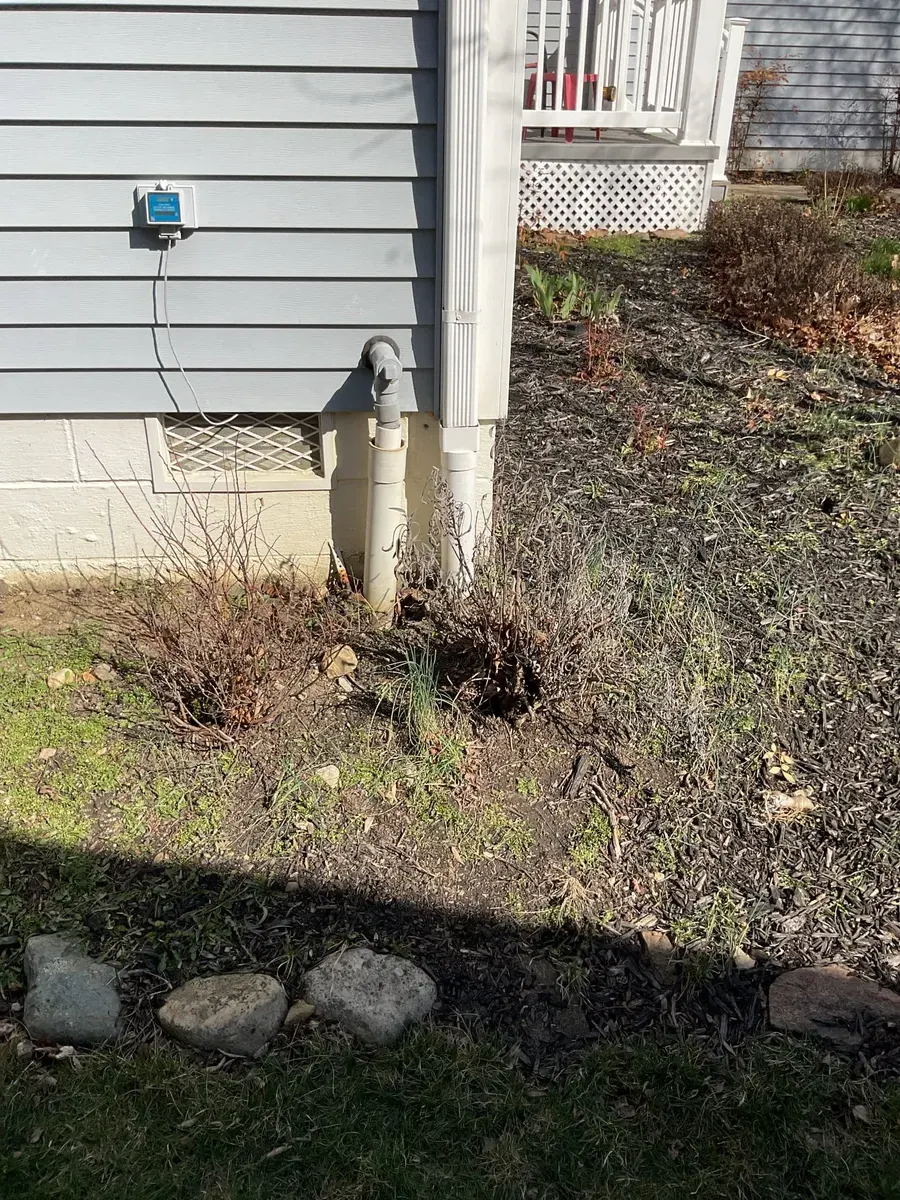
    The discharge line carries water away from your foundation and must exit the home and drain to a point at least 10 feet away from the foundation wall. We verify the line is pitched correctly and that the exit point won't reintroduce water toward the house. In Ohio winters, we account for freeze risk on exterior discharge lines.

Why Columbus Soil and Weather Make This a Real Priority
Central Ohio's clay soil doesn't absorb water the way sandy or loam-based soil does. After a heavy rain or a week of snowmelt, that water sits against your foundation rather than draining away. Neighborhoods like Clintonville, German Village, and parts of Westerville and Gahanna sit in areas where the water table can rise quickly enough that a properly sized, properly installed sump pump isn't optional -- it's the only thing standing between your finished basement and a very expensive mess. Ohio winters add a separate complication: discharge lines that exit through a rim joist or crawl space can freeze solid in a hard cold snap. We've seen pumps that ran fine all fall come to a halt in January because the discharge line was undersized or poorly insulated at the exit point. We address that during installation, not after. Our plumbing team also checks local code requirements before we start. Columbus and its surrounding municipalities each have specific rules about where discharge water can exit and whether permits are required. We handle that coordination so you don't have to.
pump sizing for central ohio work, professional service in Columbus, OH

What Safe Electric & Plumbing Covers on Every Installation

We back every sump pump installation with the manufacturer's warranty on the unit itself, and our workmanship is guaranteed. If the installation has a problem on our end, we fix it.
  1. Sump pit inspection or new pit excavation

    Proper depth and diameter per local code

  2. Float switch set and tested before we leave

  3. Discharge line routed and pitched correctly

    Exits the home and directs water away from the foundation

  4. Manufacturer warranty upheld

    We install to spec so the warranty stays valid

Call (614) 267-4111

Signs Your Current Pump Is Failing Before It Fails Completely

Don't wait for a flooded basement to find out the pump was already struggling.

Runs Constantly or Cycles Too Fast

A pump that never stops running or turns on and off every few minutes is either undersized for your water volume or has a failing float switch. Neither fixes itself. This is the most common warning sign we see on service calls.

Makes Grinding or Rattling Sounds

A pump in good condition runs with a consistent hum. Grinding means the impeller is damaged or there's debris in the pit jamming the mechanism. Rattling often means the pump has shifted off its base. Both accelerate wear.

Doesn't Activate During Rain

If you notice water pooling in the pit after a storm and the pump never kicked on, the float switch has likely failed. This is a silent failure -- the pump looks fine but won't respond when it needs to.

All the Plumbing Services Under One Roof

Safe Electric & Plumbing handles the full range of residential plumbing work across Central Ohio. One call covers it all.

Our shop

3208 Morse Rd, Columbus, OH 43231

Mon–Sun: 12 AM–11:30 PM

Frequently asked questions

Not on the list?(614) 267-4111Mon–Sun: 12 AM–11:30 PM
What size sump pump does a Columbus, OH home typically need?
Most Columbus homes with normal basement drainage conditions run fine with a 1/3 horsepower submersible pump. Homes in low-lying areas, homes with a history of significant flooding, or properties where the water table rises quickly after rain often need a 1/2 HP unit. Columbus clay soil holds water longer than most soil types, which means the pump may run more frequently than it would in other regions. We assess inflow rate during the estimate so you're not paying for more pump than necessary or under-equipped when a storm hits.
What's the average lifespan of a sump pump in Central Ohio?
Most sump pumps last 7 to 10 years. Pumps in Columbus homes with high water tables or heavy clay soil often log more run hours per year than national averages suggest, which can shorten that window. A pump that runs constantly during wet seasons may need replacement closer to the 7-year mark. If you don't know when your pump was installed, an inspection is a better starting point than waiting for it to fail during a storm.
Should I install a battery backup sump pump in Columbus?
Honestly, yes -- if your basement has anything in it worth protecting. Columbus storms frequently knock out power, and a sump pump that can't run during an outage is useless at the exact moment it's most needed. Battery backup systems kick in automatically when power fails and give you hours of run time depending on the unit and the inflow rate. Homes in areas with frequent outages or near drainage corridors should treat backup as a standard part of the installation, not an optional add-on.
Why does Columbus clay soil affect how my sump pump performs?
Clay doesn't drain. When rain hits sandy or loamy soil, water percolates down and disperses. Clay holds it in place, which means water pressure against your foundation walls builds faster and stays higher longer after a storm. Your pump has to work harder and run longer to keep up. That's why pump sizing matters more in Central Ohio than the box-store sizing guides suggest -- those guides assume average soil conditions that Columbus simply doesn't have.
What can go wrong with a sump pump discharge line in an Ohio winter?
Discharge lines that exit through a rim joist or run along an exterior wall can freeze when temperatures drop hard. A frozen line creates a blockage the pump can't push through, which causes it to run continuously or overheat. The exit point needs to be sized correctly -- a too-narrow exit freezes faster -- and the outdoor portion should be positioned so it sheds ice rather than accumulating it. We factor Ohio winter conditions into discharge routing on every installation we do.
Do I need a permit for sump pump installation in Columbus?
Permit requirements vary depending on the scope of the work and the municipality. New pit excavation is more likely to require a permit than a straight pump replacement. Our plumbers check with the local building department before we start and handle the coordination. You won't need to chase down a permit office on your own. We're familiar with Columbus and the surrounding communities, including Westerville, Gahanna, and Reynoldsburg, and their local requirements differ enough that we verify each one.
Can a sump pump handle all basement water problems, or do I need something else?
A sump pump removes water that's already entered the pit. It doesn't stop water from seeping through foundation cracks, and it can't compensate for a failed or absent sewer drain system. If you're seeing water coming through the walls rather than pooling on the floor, the pump is part of the solution but not all of it. We'll tell you honestly if the installation alone solves your problem or if there are drainage issues that need to be addressed alongside it.

Related