Mon–Sun: 12 AM–11:30 PM Serving Columbus since 1994

EV Charger Installation in Columbus & Central Ohio

Licensed electricians serving Columbus homeowners with safe, code-compliant home charging stations.
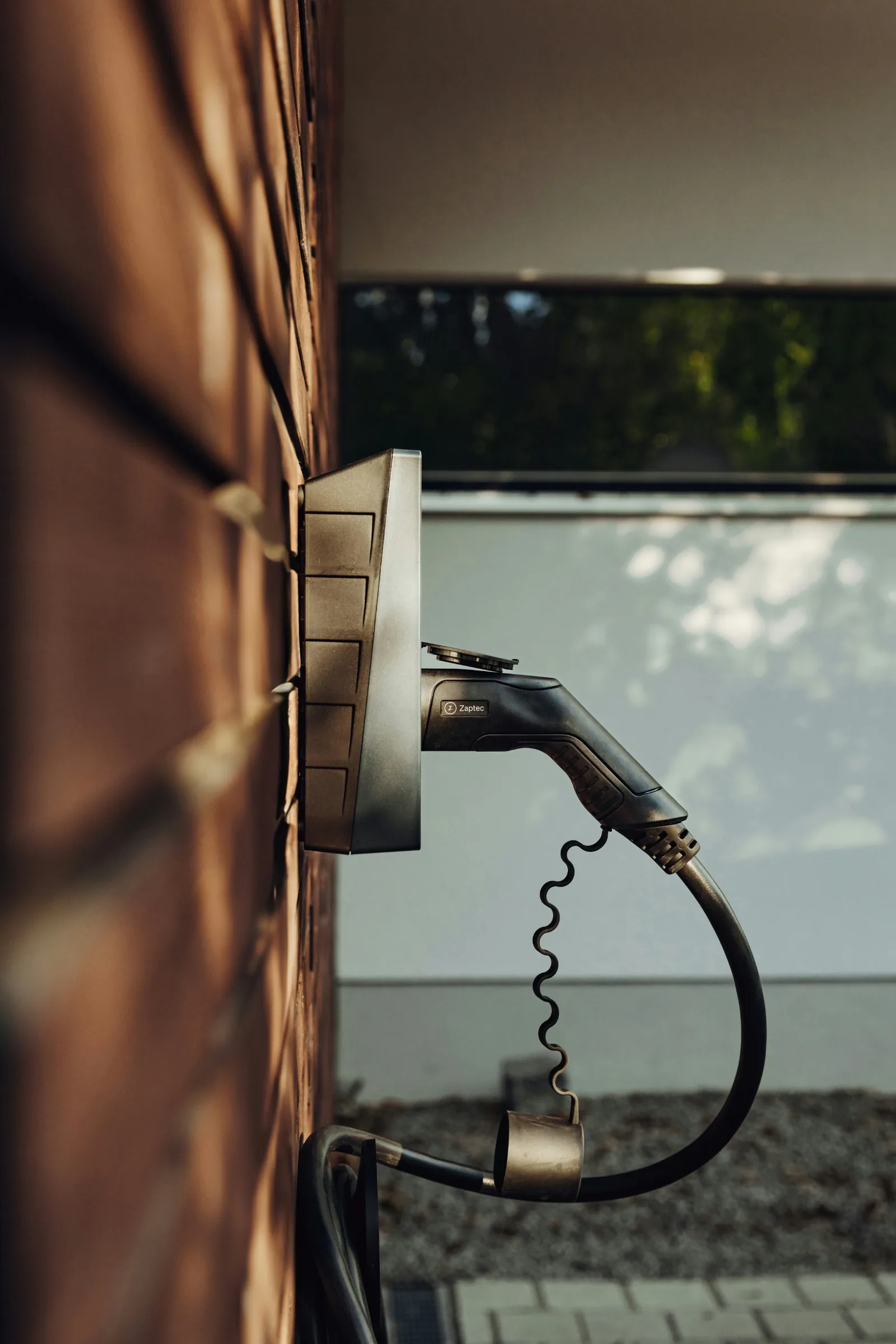
An electric vehicle charger mounted on an exterior wall, ready for home charging.

Get in touch

Call, text, or schedule online

★★★★★
“This company is top notch! Chris and Morgan were efficient knowledgeable and customer focused! …”
James R. · Google review

Home EV Charger Installation in Columbus

Safe Electric & Plumbing handles EV charger installation in Columbus and throughout Central Ohio, giving homeowners a faster, safer alternative to public charging stations. Our licensed electricians evaluate your panel capacity, wiring path, and charger requirements before any work begins, so the finished installation meets Ohio electrical code and your vehicle manufacturer's specs. If you're not sure whether your home is ready, that's exactly the call to make: (614) 267-4111.

Installing an EV charger is more than mounting a box on the garage wall. Your home's electrical system has to safely carry the charger's continuous amperage draw, and that means the right breaker size, the right wire gauge, and a dedicated circuit that isn't sharing capacity with anything else. In homes with a newer 200-amp panel and available breaker slots, a Level 2 charger can often go in without any other work. In older Columbus homes still running 100-amp service, or panels that are already full, a service upgrade or panel replacement comes first. Cost depends on which situation you're in: a straightforward dedicated circuit installation sits at one end of the range, while a full panel replacement plus charger wiring sits at the other. Every job is different, contact Safe Electric & Plumbing for an accurate estimate.

Level 1 vs. Level 2 EV Chargers

The charger you pick determines how much electrical work your home needs.

Level 1 Charging (120V)

Every EV ships with a Level 1 cord that plugs into a standard household outlet. It works, but it's slow. Most vehicles recover three to five miles of range per hour. If you drive fewer than 30 miles a day and park overnight, a Level 1 setup may be enough without any new wiring. For everyone else, it's not.

Level 2 Charging (240V)

A Level 2 charger runs on a 240-volt dedicated circuit, the same voltage as a clothes dryer or electric range. Charge rates jump to 20 to 30 miles of range per hour, meaning a fully depleted battery is ready by morning. This is the right choice for daily drivers, longer commutes, and any household with more than one EV.

Level 3 / DC Fast Charging

DC fast chargers require three-phase commercial power and draw 50 to 350 kilowatts. They're built for commercial and public charging sites. Safe Electric & Plumbing doesn't install them for residential use because the infrastructure simply isn't practical in a home setting, and any contractor telling you otherwise is overselling.

Does Your Panel Support EV Charging?
This is the question that determines how much the project costs. A Level 2 charger typically pulls 40 to 50 amps continuously, so your panel needs a free 50- or 60-amp breaker slot and enough headroom in the overall service to handle that load alongside everything else running in the house. If your panel is full, your breakers trip when large appliances run together, your lights dim when the dryer or HVAC kicks on, or your home still has 100-amp service, Safe Electric & Plumbing will run a load calculation before moving forward. That calculation tells us exactly what your home's electrical demand looks like and whether a charger can be added safely. See our electrical panel types article if you want to understand what you're looking at before we arrive. Homes built before 1980 in neighborhoods like Clintonville, Grandview, and older parts of the east side frequently have service that needs attention before an EV charger is a realistic option. We're straight with homeowners about that. If a panel replacement is necessary, we'll tell you clearly and give you the full picture before any decision is made.
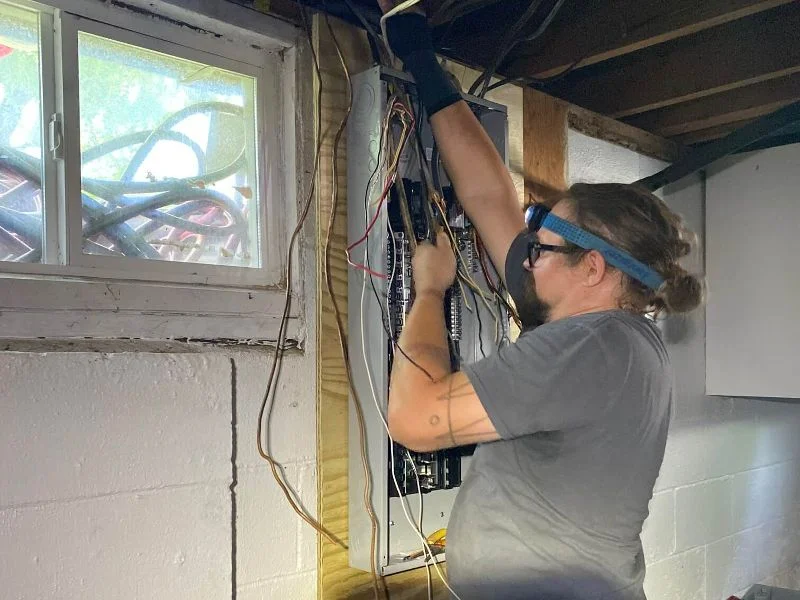
Electrical wiring and panel work being performed during an EV charger installation evaluation.

Dedicated Circuit and Wiring for Home Charging

Every Level 2 installation follows the same four-step sequence, regardless of the charger brand.

Electrical Evaluation and Load Calculation

Safe Electric & Plumbing reviews your current service amperage, panel capacity, available breaker slots, and total electrical load. This step determines whether your home can support an EV charger as-is or whether a service upgrade needs to happen first.

Wiring the Run and Mounting the Charger

The wiring path from panel to charger location is planned to minimize distance and stay within walls where possible. Outdoor installations get weatherproof conduit rated for Ohio winters. Wall-mounted and hardwired configurations both available depending on your charger model.

Inspection and Code Compliance

EV charger installations in Columbus require a permit and city inspection. Safe Electric & Plumbing handles the permit filing and coordinates the inspection so the finished work is documented and compliant. This matters for insurance coverage and future home sales.

What Affects the Cost of EV Charger Installation

There's a wide range of what EV charger installation can cost, and the spread is real. A home with a modern panel, an open breaker slot, and a garage next to the electrical room is the straightforward end. A home with 100-amp service, a full panel, and a detached garage 60 feet from the house is the complex end. Most projects land somewhere between those two. The factors Safe Electric & Plumbing reviews on every job are listed below. None of these are upsells. They're the actual variables that determine what your installation requires.
  • Available capacity in your existing electrical panel
  • Whether a dedicated 240-volt circuit must be installed
  • Distance between the electrical panel and charger location
  • Garage, carport, driveway, or exterior mounting requirements
  • Wall-mounted versus hardwired charger configuration
  • Electrical service upgrades or panel replacement needs
  • Permit and inspection requirements

Where Should a Home EV Charger Be Installed?
Most Columbus homeowners install their charger in an attached garage, which keeps wiring runs short and the charger protected from weather. That's the easiest situation. A carport or exterior driveway installation is doable but adds weatherproofing requirements, and Ohio winters are hard on equipment that isn't properly rated. Detached garages are a common challenge in older Columbus neighborhoods. A subpanel in the detached structure simplifies things and gives you capacity for other garage circuits at the same time. We can run that alongside the EV charger work rather than making it two separate visits. For outdoor charging on driveways without covered parking, we use conduit and weatherproof outlet boxes rated for outdoor exposure. The charger itself needs to be rated for outdoor installation, something we confirm against manufacturer specs before mounting it. If you're buying a charger and aren't sure which model is appropriate for your situation, ask when you call. We'll point you in the right direction.
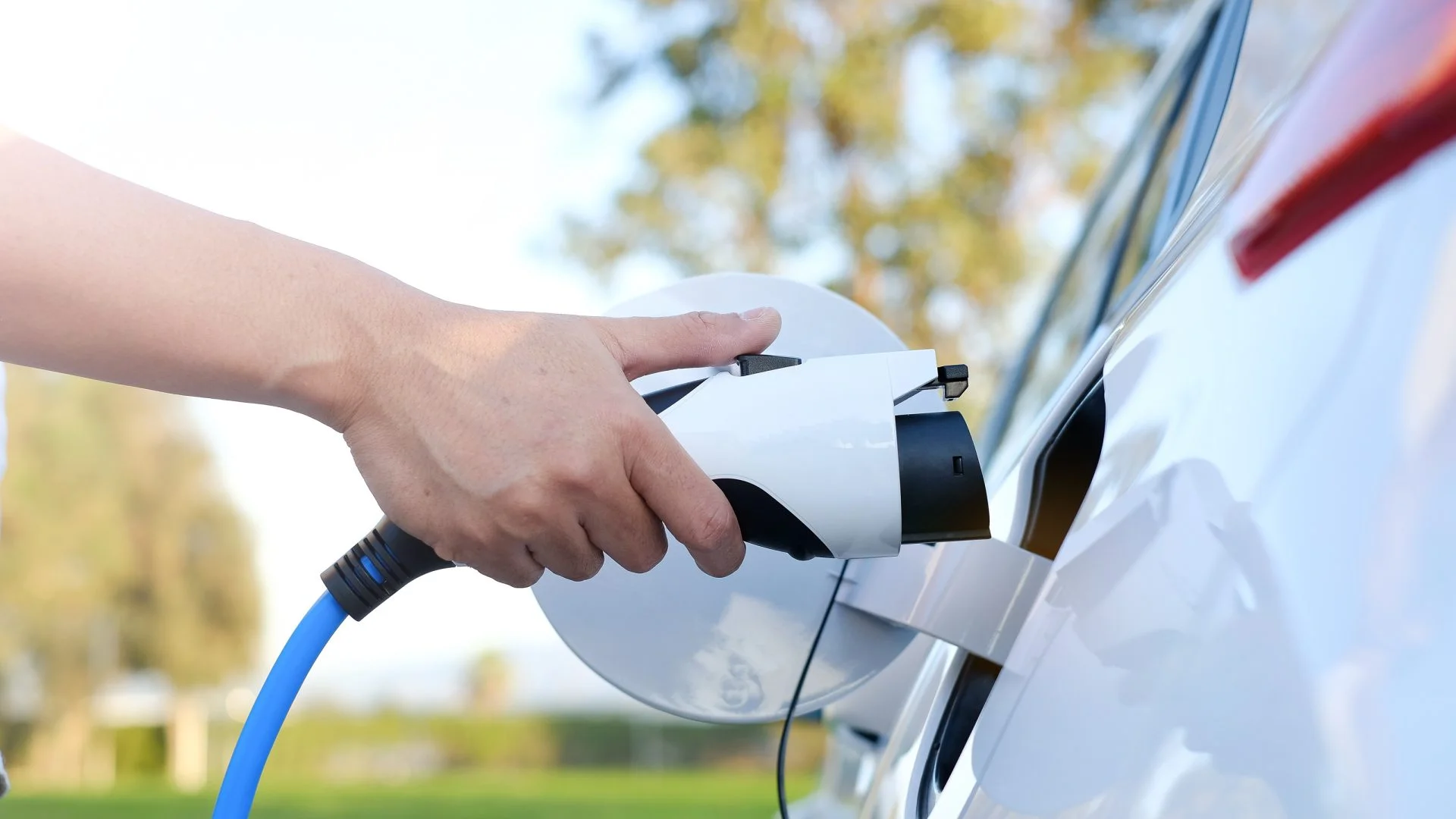
An EV charging cable being connected to an electric vehicle, representing home charging station installation in Columbus.

When an EV Charger Becomes a Wiring Safety Issue

A significant share of EV charger fires and failures trace back to the same problem: someone used an existing outlet that wasn't designed for continuous high-amperage draw. A dryer outlet, a 240V range outlet, even a NEMA 14-30 that's been sitting unused in the garage. The outlet looks like it fits. It might even work for a while. But a dryer runs for 45 minutes. An EV charger runs for eight hours, every night, at near-full amperage. That's a different load profile entirely, and wiring that was sized for intermittent use degrades under continuous load. 4.9-star average across 2,962 Google reviews. When something goes wrong with an EV charger installation, it's almost always because someone skipped the evaluation step. We don't skip it. Call (614) 267-4111 to schedule yours.
Call Safe Now

Frequently Asked Questions

Not on the list?(614) 267-4111Mon–Sun: 12 AM–11:30 PM
How do I know if my home's electrical panel can support a Level 2 EV charger?
The two things to check are total service amperage and available breaker capacity. A Level 2 charger typically needs a 50- or 60-amp dedicated breaker. If your home has 200-amp service and open slots in the panel, there's a good chance you're ready. If you have 100-amp service or a panel that's already full, a load calculation is the first step. Safe Electric & Plumbing runs that evaluation before recommending any path forward.
Can I use my dryer outlet to charge my EV?
Technically the voltage matches on some outlets, but it's not a safe long-term solution. A dryer outlet is wired and rated for intermittent high-amperage use, not eight hours of continuous draw every night. Wiring that handles a dryer cycle degrades under the sustained load of overnight EV charging. A dedicated circuit, properly sized for the charger's continuous amperage, is the right installation. It's also what Ohio electrical code requires.
What are the Ohio or Columbus-specific requirements for residential EV charger installation?
Columbus requires a permit for EV charger installations that involve new wiring or circuit work. That permit triggers a city inspection once the job is complete. The installation must comply with the National Electrical Code as adopted in Ohio, which includes requirements for dedicated circuits, proper wire gauge, breaker sizing, and outdoor weatherproofing where applicable. Safe Electric & Plumbing files the permit and manages the inspection process on your behalf.
Are there rebates or incentives available in Ohio for home EV charger installation?
Ohio doesn't currently offer a state-level rebate on top of that, though utility programs can change year to year. Check directly with your utility provider for any available demand-response or rebate programs. Safe Electric & Plumbing can confirm what work qualifies for the federal credit based on your specific installation.
Can a standard electrician install a home EV charger, or does it require specialized training?
Any licensed electrician can physically install a 240-volt circuit and mount a charger. The issue is whether they understand the load calculation requirements, continuous-draw characteristics, and code compliance specific to EV equipment. Safe Electric & Plumbing's electricians have handled EV charger installations across Columbus, in both older homes that needed panel work and newer builds where the circuit went straight in. The experience matters when your panel situation isn't straightforward.
How long does EV charger installation typically take?
A straightforward installation, where the panel has capacity and the charger location is close to the panel, is usually a single-day job. Projects that involve a panel upgrade, a longer wiring run to a detached garage, or outdoor conduit work take longer, sometimes two days including permit and inspection coordination. Safe Electric & Plumbing gives you a clear timeline during the initial evaluation so you're not guessing.
What electrical permit is required for EV charger installation in Columbus?
Columbus requires a permit for any EV charger installation that involves new circuit work or wiring. That permit triggers a city inspection once the job is complete. The work must comply with the National Electrical Code as adopted in Ohio, covering dedicated circuits, wire gauge, breaker sizing, and outdoor weatherproofing where applicable. Safe Electric & Plumbing files the permit and coordinates the inspection.
Are there rebates or tax incentives available in Ohio for home EV charger installation?
Ohio doesn't currently offer a separate state-level rebate on top of that. Utility rebate programs can change year to year, so check directly with your provider. Safe Electric & Plumbing can confirm which portions of your installation qualify for the federal credit based on what work is performed.
How long does a typical home EV charger installation take in Columbus?
A straightforward installation where the panel has capacity and the charger is near the panel is usually a single day. Projects involving a panel upgrade, a long wiring run to a detached garage, or outdoor conduit work in weatherproof conduit can take two days including permit and inspection coordination. Safe Electric & Plumbing gives you a clear timeline during the initial evaluation.
What's the difference between a wall-mounted and hardwired EV charger installation?
A plug-in Level 2 charger connects to a dedicated NEMA 14-50 outlet, which means the charger can be moved if needed. A hardwired charger is wired directly into the circuit with no plug, which is required by some charger manufacturers and preferred when the installation is permanent. Both approaches require a dedicated 240-volt circuit. Safe Electric & Plumbing installs either configuration based on your charger specs and preference.

Serving Columbus and Central Ohio Since 1994

Safe Electric & Plumbing installs EV chargers for homeowners across Columbus and the surrounding area, from newer construction in New Albany and Powell to older housing stock in Clintonville, Grandview, and German Village. If you're in Central Ohio, we're local.

Our shop

3208 Morse Rd, Columbus, OH 43231

Mon–Sun: 12 AM–11:30 PM

Our shopTowns we serve45-mile service area

Related