
Mon–Sun: 12 AM–11:30 PM Serving Columbus since 1994

Sewer Line Repair in Columbus

Camera inspection first, then the right fix, no guesswork, no unnecessary digging.

Get in touch

Call, text, or schedule online

★★★★★
“Tyson was the best! He was on time and took his time to make sure everything was correct and to explain everything to me. …”
Allison V. · Google review

Columbus Sewer Line Repair, Done Right

Safe Electric & Plumbing handles sewer line repair in Columbus and across Central Ohio, diagnosing the problem with camera inspection before any work begins, so you know exactly what you're dealing with before anyone picks up a shovel. If your drains are slow, your yard smells like sewage, or you're seeing water backing up in multiple fixtures at once, the problem is almost certainly in the main line, not the branch drains. Call us now at (614) 267-4111 and we'll get a camera in the line the same visit.

Sewer line problems in Columbus range from a simple root intrusion that clears with hydro jetting to a fully collapsed clay pipe that needs section replacement or full-line relining. The difference between a $500 fix and a $5,000 fix depends entirely on what the camera finds, and on how long a homeowner waits. Columbus clay soils shift with freeze-thaw cycles every winter, and older pipe materials common in pre-1980 homes don't flex with them. We've been working in these neighborhoods since 1994, so we've seen what Clintonville, Hilliard, and Reynoldsburg clay does to cast iron and orangeburg pipe over 40-plus years. 4.9-star rating across 2,962 Google reviews, and we're BBB accredited. Every job is different, contact Safe Electric & Plumbing for an accurate estimate.

What a Sewer Camera Actually Tells Us

The camera inspection is not optional. It's how we avoid selling you a repair you don't need.

We run a high-resolution camera through your main line from the cleanout before we quote any repair. The footage shows us pipe material, diameter, joint condition, root intrusion, bellies (low spots where waste pools), cracks, offsets, and full collapses. That footage is yours, we review it with you on the spot. A lot of Columbus homes, especially those built between 1950 and 1980, have a mix of cast iron and orangeburg or clay tile pipe. Those materials fail differently, and the repair approach has to match. Guessing costs you money. The camera doesn't. Our sewer drain services start here, every time.

Why Columbus Clay Soil Shortens Pipe Life

Central Ohio sits on expansive clay subsoil that shrinks in dry summers and swells after rain. That movement puts lateral stress on underground pipe joints every year. Cast iron pipe handles it reasonably well for 50 or 60 years. Clay tile pipe, common in pre-1960 Columbus homes, relies on mortar joints that eventually crack under that kind of pressure. Orangeburg pipe, a compressed tar-paper product installed through the 1950s, absorbs moisture and deforms on its own, without any help from the soil. If your home was built before 1975 and you've never had a sewer camera inspection, you don't know what you have down there. Columbus sewer laterals typically run 6 to 10 feet deep in residential neighborhoods, which means the soil pressure on those old joints is significant and consistent. We've pulled orangeburg out of Westerville basements that had turned soft enough to compress by hand. That's not hyperbole. It's what 32 years of work in Central Ohio looks like.

Signs Your Sewer Line Needs Attention

Some of these are obvious. A couple are easy to miss until the damage is done.

Multiple Slow Drains

One slow drain is a branch clog. Two or more slow at once, especially on different floors, points to the main line.

Gurgling Sounds After Flushing

Air trapped in the line by a partial blockage pushes back through the water in nearby traps. Gurgling is the sound of a line that's close to full.

Sewage Smell Outdoors

A sulfur or sewage odor in the yard, especially over the sewer lateral path, often means a crack or separation is leaching below grade.

Unusually Green or Wet Grass

A leaking sewer line fertilizes and irrigates the soil above it. A strip of grass that's greener than the surrounding lawn is worth a camera look.

Foundation Cracks or Sinkholes

A long-term leak under the yard erodes soil. Eventually that shows up as soft spots, small sinkholes, or in serious cases, movement near the foundation.

Permits, Codes, and the City Connection

Sewer repair in Columbus that involves the lateral from your foundation to the city main requires a permit from the Columbus Division of Sewerage and Drainage. We pull that permit. We schedule the required inspection. We don't hand you a permit application and tell you to handle it yourself, and we don't do the work before it's approved. Some contractors skip permitting to move faster, that puts the homeowner at risk for code violations and can void a homeowner's insurance claim if the unpermitted repair later causes damage. Ohio plumbing codes govern pipe material, slope, joint type, and backfill requirements. PVC SDR 35 is the current standard for new sewer laterals. We install to that standard regardless of what was there before. Our plumbing services are always code-compliant. That's not a claim, it's a condition of getting the final inspection signed off.

Will Homeowners Insurance Cover Your Sewer Line?

Standard homeowners insurance in Ohio covers sudden and accidental damage, a pipe that ruptures unexpectedly due to outside force, for example. It does not cover gradual deterioration, root intrusion, or wear-and-tear failure, which is how most Columbus sewer lines actually fail. Some policies include sewer line coverage as a rider or through a separate service line endorsement; check your declarations page or call your agent before assuming. What we can do: provide a written camera inspection report and a detailed scope of work that documents exactly what failed, what caused it, and what the repair involves. Insurance adjusters need that documentation to process any claim that might qualify. We've put together that paperwork for Columbus homeowners many times.

Call Safe. Nearly 24/7, Every Day.

Sewer backups don't wait for business hours. Neither do we.

Call (614) 267-4111
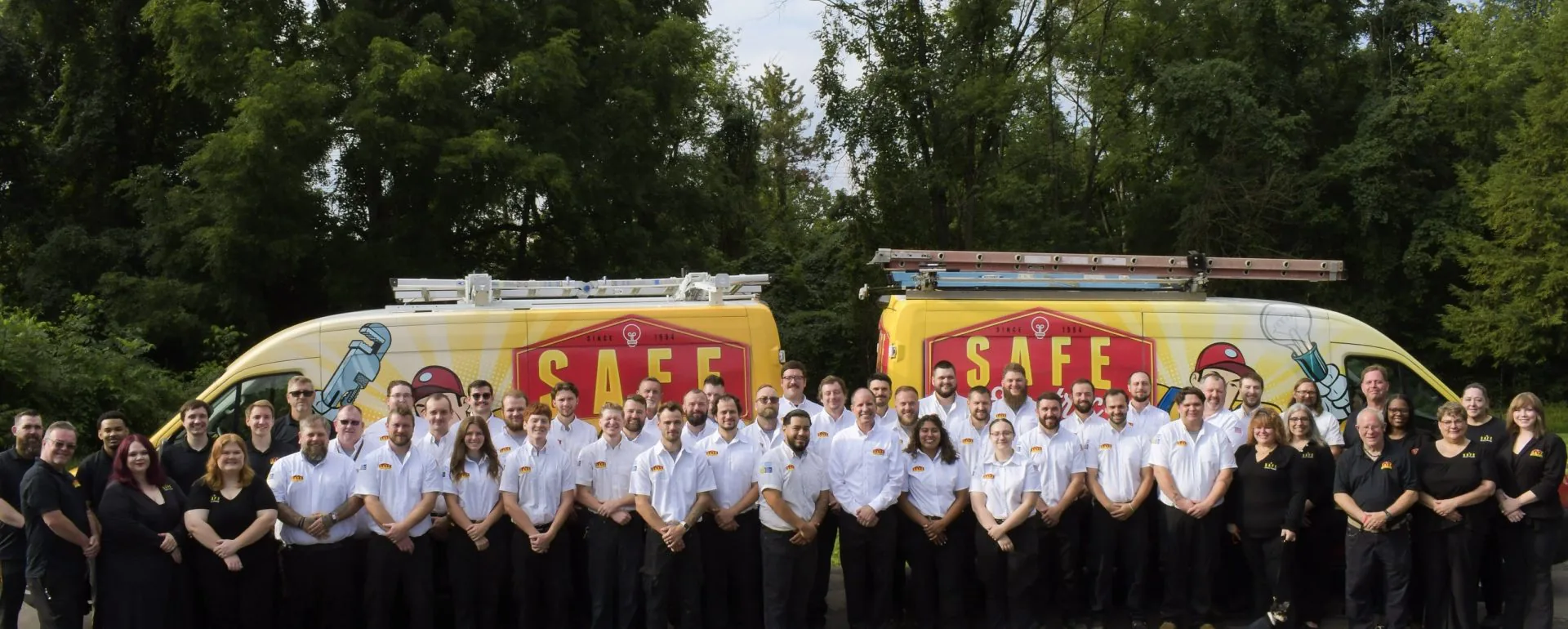
The Safe Electric & Plumbing team

32 years in Columbus means we've worked in every neighborhood and seen every pipe material this city has.

  1. 4.9 stars across 2,962 Google reviews

    Verified reviews from Columbus-area homeowners

  2. BBB accredited since our founding year

    An independent standard, not a self-reported badge

  3. Camera inspection before any repair quote

    We won't quote work we haven't diagnosed

Call (614) 267-4111

Sewer Line Repair: Common Questions

Not on the list?(614) 267-4111Mon–Sun: 12 AM–11:30 PM
How do I know if I have a sewer line problem versus a drain problem?
A single slow or clogged drain is almost always a branch-line issue, a localized blockage in the pipe serving that one fixture. A sewer line problem shows up in multiple fixtures at once, often on different floors. Sewage backing up into a basement drain when you flush a second-floor toilet is the clearest sign. Gurgling in one drain while another fixture is running is another. If more than one fixture is affected, call us before running more water through the system.
Can sewer pipes be repaired without digging?
Sometimes. Trenchless pipe relining works when the existing pipe is cracked or root-infiltrated but still structurally round, the liner needs a round host pipe to inflate against. It won't work on a collapsed section, a severe belly, or a pipe that's been crushed by soil movement. We run the camera first specifically to determine whether trenchless is a legitimate option for your line. If it is, we'll tell you. If it isn't, we'll explain exactly why.
How deep is a residential sewer line buried in Columbus?
Most Columbus residential sewer laterals run between 6 and 10 feet below grade, though it varies by neighborhood, lot grade, and when the home was built. Depth affects excavation cost and the permitting requirements for repair. Older homes in established Columbus neighborhoods like Clintonville and German Village sometimes have shallower laterals than newer construction in Reynoldsburg or Hilliard. The camera inspection gives us the route; we calculate depth from there.
Is sewer pipe relining worth it compared to full replacement?
When the pipe qualifies, and that's the key condition, relining is faster, less disruptive to your yard and landscaping, and comparable in long-term durability to new PVC. A cured-in-place liner in good condition lasts 50 years. The honest answer is that it depends entirely on what the camera shows. A relined pipe with a belly is still a pipe with a belly. Full replacement costs more upfront but solves problems that relining can't. We'll show you the camera footage and give you both options with a straight explanation of the tradeoffs.
What causes sewer line problems specifically in Columbus?
Three things are responsible for most of what we see: clay soil expansion and contraction cycling through Columbus winters, tree root intrusion from the large tree canopy in older residential neighborhoods, and pipe material age. Orangeburg and clay tile pipe installed through the 1950s and 1960s were never designed to last 70 years. Cast iron holds up longer but corrodes from the inside over time. Columbus homes built before 1975 are candidates for a baseline camera inspection just to know what's there, especially before listing a home for sale.
What should I do immediately if I have a sewer backup?
Stop using water in the house. Don't run the dishwasher, do laundry, or flush any toilet until the line is cleared. Raw sewage backup is a health hazard, don't walk through it or attempt to clear it yourself with a consumer drain snake. Call (614) 267-4111. We're available nearly 24/7, and a sewer backup is exactly the situation those hours exist for. The faster we get a camera in the line, the faster we know whether it's a blockage we can clear the same visit or a structural failure that needs excavation.
Will homeowners insurance cover a broken sewer line?
Standard Ohio homeowners insurance covers sudden, accidental damage. Not gradual deterioration, root intrusion, or age-related failure, which is how most Columbus sewer lines actually fail. Some policies include a service line rider that may cover the lateral. Check your declarations page or call your agent. We can provide a written camera inspection report and detailed scope of work to support any claim that might qualify. We've prepared that documentation for Columbus homeowners many times.

Serving Columbus and Central Ohio

We run sewer line repair calls across the Columbus metro from our location at 3208 Morse Rd. Our sewer drain repair crews cover the city and surrounding communities.

Our shop

3208 Morse Rd, Columbus, OH 43231

Mon–Sun: 12 AM–11:30 PM

Our shopTowns we serve45-mile service area

Related