
Electrical Wiring Repair in Columbus
Outlets, breakers, fixtures, and partial outages diagnosed and fixed by Columbus electricians with 32 years in the trade.
“Austin Christopher was amazing and fixed a major power issue in our ancient house. …”
Columbus Wiring Repairs Done Right the First Call
Safe Electric & Plumbing handles electrical wiring repair throughout Columbus and Central Ohio, from dead outlets in Clintonville bungalows to partial power loss in Worthington split-levels. If something in your home stopped working and you can't figure out why, that's exactly the call we're built for. Our technicians don't guess their way through a diagnosis. They trace the problem systematically, find the source, and fix it to code. With 4.Call (614) 267-4111 and we'll get someone out.
Wiring problems in Columbus homes range from a single failed outlet to a circuit that's been overloaded for years without anyone knowing it. Older neighborhoods like German Village, Clintonville, and Olde Worthington are full of homes built before 1970, and those houses weren't wired for the electrical load modern families put on them. Aluminum wiring, worn insulation, outdated two-prong circuits, and undersized panels are common findings. The repair scope depends on what we find during diagnosis: sometimes it's a loose connection at a junction box, sometimes it points to a panel replacement. We'll tell you what the job actually requires before any work starts. Every job is different. Contact Safe Electric & Plumbing for an accurate estimate.
Signs Your Wiring Needs a Professional Look
These aren't things to watch and wait on.
Flickering or Dimming Lights
Occasional flicker can be a loose bulb. Persistent dimming when an appliance kicks on points to a circuit that can't carry the load. That's a wiring or panel issue, not a bulb issue.
Outlets That Stopped Working
A dead outlet is often a tripped GFCI or a failed breaker. It can also mean a broken connection inside the wall. Either way, it shouldn't be ignored or bypassed with an extension cord.
Breakers That Keep Tripping
A breaker that trips once after an overload is doing its job. One that trips repeatedly on a normal load is telling you something: a short circuit, a ground fault, or a circuit that's undersized for the demand on it.
Burning Smell or Discolored Outlets
Scorched outlet covers and a faint burning smell are the clearest signs of arcing in the wall. Don't reset the breaker and move on. Turn it off and call us. Arcing is the leading cause of residential electrical fires.
Partial Power Loss After a Storm
If half your house lost power but the other half is fine, your main panel likely lost one leg of service from AEP Ohio's drop. That's a utility coordination and panel diagnostic call, not a simple reset.
Two-Prong Outlets Throughout the Home
Ungrounded outlets aren't just inconvenient. They're a shock and fire risk for modern electronics. If your older Columbus home still runs on two-prong circuits, that wiring system needs an honest assessment.
How We Diagnose Wiring Problems
Systematic Circuit Tracing
We start at the panel and work outward, checking for voltage drop, open neutrals, and failed connections at every junction point. No guessing, no random swapping of parts to see if it fixes things.
Identify Root Cause
A tripping breaker isn't the problem. It's the symptom. We find what's actually overloading or shorting the circuit before we recommend any repair, so we're fixing the cause, not just resetting the breaker.
Clear Upfront Assessment
Before any work begins, your technician walks you through what they found and what the repair involves. No surprises on the bill. If the scope changes once we're in the wall, we tell you before we go further.
Wiring Repairs We Handle Every Day
Outlet and Switch Replacement
Failed outlets, loose switches, and ungrounded two-prong receptacles. We also install GFCI protection in kitchens, bathrooms, garages, and outdoor locations where code requires it.
Circuit Breaker Repair and Replacement
Worn or faulty breakers that won't hold. Arc fault breakers required by Ohio residential code in bedrooms and living areas. Breaker swaps on panels that are otherwise in serviceable condition.
Lighting and Fixture Wiring
Flickering overhead lights, failed recessed fixtures, improperly wired ceiling fans. We trace back to the switch leg and fix the connection, not just swap the fixture and hope the problem went away.
Junction Box and Connection Repairs
Loose wires in junction boxes are responsible for a lot of intermittent electrical problems Columbus homeowners spend months chasing. We open them up, inspect every connection, and secure anything that's moved or corroded.
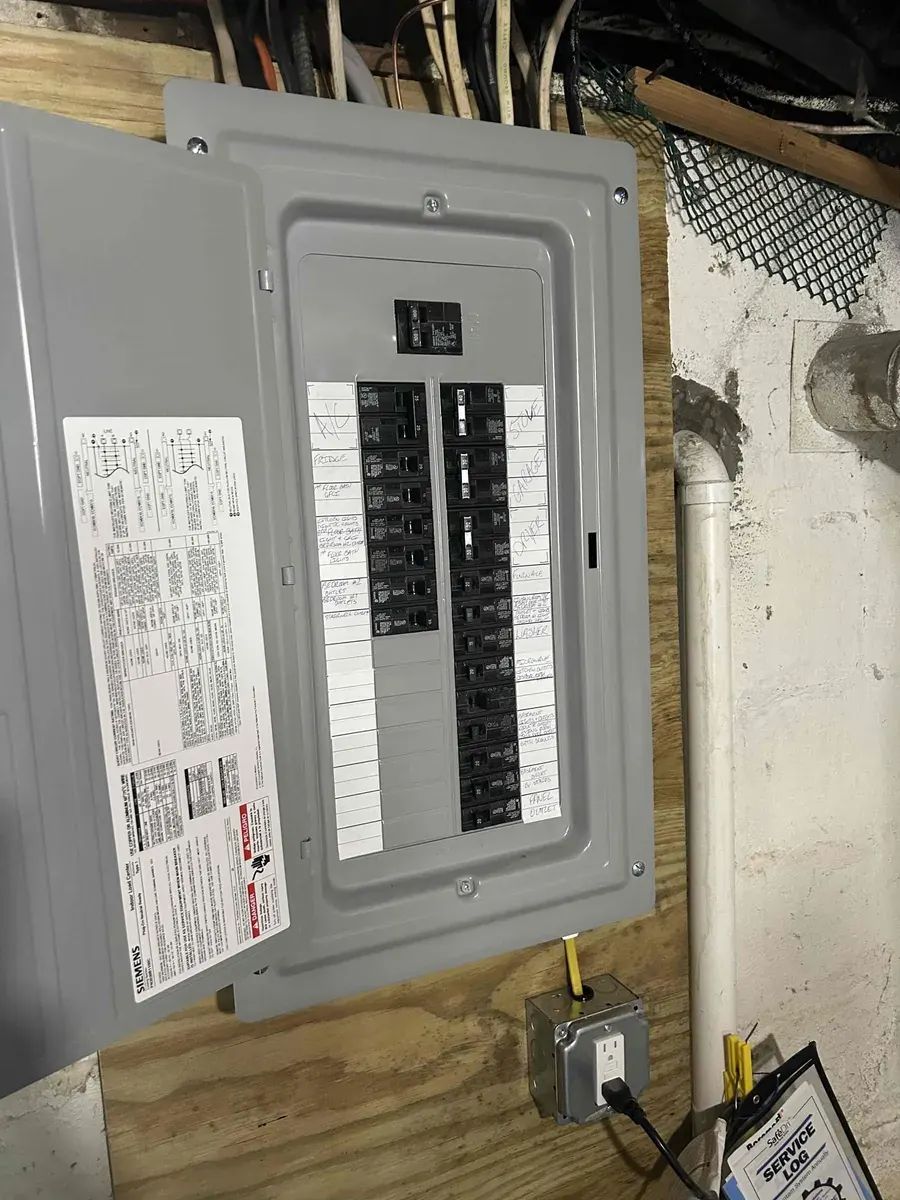
Older Columbus Homes: What We Find Inside the Walls
Repair vs. Replace: How We Make That Call
We won't recommend a full rewire when a targeted repair is the right call. And we won't patch a system that's genuinely unsafe just because it's cheaper today.
Isolated failure in otherwise solid wiring
Single-point repairs. We fix the failed component and document what we found.
Code violations that exceed the repair scope
If a repair requires bringing adjacent work up to current Ohio code, we tell you that before we start.
Insurance-triggered inspections
Some Columbus homeowners get flagged by their insurer. We provide written documentation of work completed and current system condition.
Aluminum wiring or mixed-system concerns
We assess the full scope and give you options. A partial upgrade is sometimes the right middle ground.
When Wiring Problems Become Emergencies
Some wiring problems don't wait. A burning smell from an outlet, visible sparking, an outlet that's hot to the touch, or a breaker that won't stay on after a reset are all situations where you shut off the affected circuit and call right now. Safe Electric & Plumbing is available nearly 24/7, seven days a week. If you're in Columbus or anywhere in Central Ohio and you've got something that feels urgent, don't wait until Monday morning to find out. Call (614) 267-4111.
Call Safe Now
Electrical Wiring Repair: Honest Answers
How do I know if my home's wiring needs repair or full replacement?
Why does my circuit breaker keep tripping on the same circuit?
Are flickering lights a serious electrical problem?
What's the difference between a partial power loss and a full outage?
Can a handyman legally do electrical wiring repairs in Ohio?
What should I do if an outlet stops working in my Columbus home?
Are flickering lights a sign of a serious electrical problem?
What is the difference between a partial power loss and a full outage?
Related
- Electrical Services in German Village
- Electrical Services in Lewis Center
- Electrical Services in New Albany
- Electrical Services in Minerva Park
- Electrical Services in Canal Winchester
- Electrical Services in Upper Arlington
- Electrical Service Upgrade
- Smoke Detector Installation
- Westerville Oh Area
- Whitehall Plumbing Services Area