Electrical Outlet Repair in Columbus
Dead outlets, loose receptacles, GFCI failures, we diagnose and fix it the same visit.
“Chad and his assistant were amazing. Very friendly guys that kept me updated on progress along the way.”
Columbus Outlet Repair Done Correctly
Safe Electric & Plumbing handles electrical outlet repair in Columbus and across Central Ohio, dead outlets, loose receptacles, failed GFCI outlets, and everything in between. If an outlet in your home has stopped working, sparks when you plug something in, or feels warm to the touch, call us now at (614) 267-4111. Those aren't minor annoyances. They're fire hazards.
Most outlet problems fall into one of three categories: a tripped breaker or GFCI that just needs resetting, worn internal components that need the outlet swapped out, or a wiring fault deeper in the circuit. The first one you can handle yourself. The second two you shouldn't. Our electricians work through a systematic diagnosis, breaker panel first, then the outlet and its wiring, so we don't replace parts that don't need replacing. Columbus homes built before 1980 often have aluminum wiring or two-prong ungrounded outlets, both of which affect what the repair involves and what code requires. Every job is different, contact Safe Electric & Plumbing for an accurate estimate.
Outlet Problems We Fix in Columbus
From a single dead outlet in a Westerville bedroom to a kitchen with no working receptacles in German Village, our electricians diagnose the cause and fix it, not just reset a breaker and leave.
Call (614) 267-4111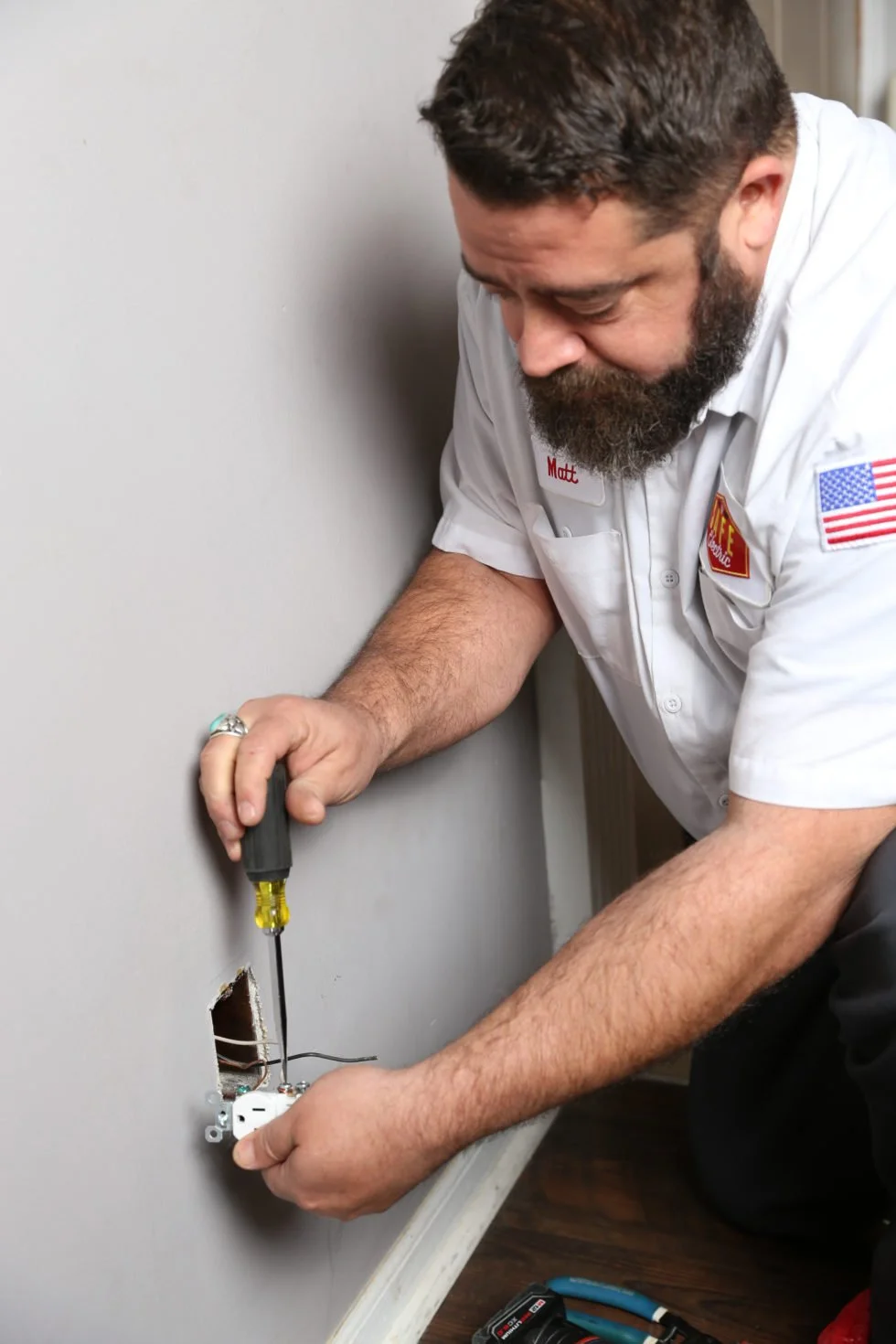
Every Type of Outlet Repair We See
These are the calls we get every week from Columbus homeowners. If yours is on the list, we know what to do.
Dead Outlets
An outlet that gives nothing when you plug in, no power, no response. Usually a tripped breaker or GFCI, sometimes a failed device, occasionally a wiring break. We find it fast.
Loose Receptacles
Plugs that fall out, wobble, or arc when you move the cord. The internal contacts are worn. This isn't a minor inconvenience. A loose connection that arcs can ignite the wall over time.
GFCI Outlet Failures
GFCI outlets in bathrooms, kitchens, and garages trip for a reason. If yours won't reset, or resets but has no power, the device itself may need replacing, or something on the circuit is still faulting.
Warm or Discolored Outlets
An outlet that's warm, shows scorch marks, or smells faintly of burning is an emergency. Turn off the circuit and call us. Don't use it again until an electrician looks at the wiring behind it.
Two-Prong Ungrounded Outlets
Common in Columbus homes built before 1965. They can't protect modern electronics, and they're not code-compliant for kitchen or bathroom use. We replace them with grounded three-prong outlets or GFCI-protected devices.
240V Outlet Installation
Dryers, EV chargers, ranges, and air compressors need a dedicated 240V circuit. We install the outlet and run the circuit from your panel. This isn't a repair job. It's a new circuit, permitted and inspected.
How We Diagnose a Dead or Broken Outlet
Panel and GFCI First
We check the breaker panel for tripped breakers and locate any GFCI outlet upstream of the dead one. A single tripped GFCI in your bathroom can cut power to six outlets in different rooms, this takes 5 minutes to rule out.
Test the Device and Wiring
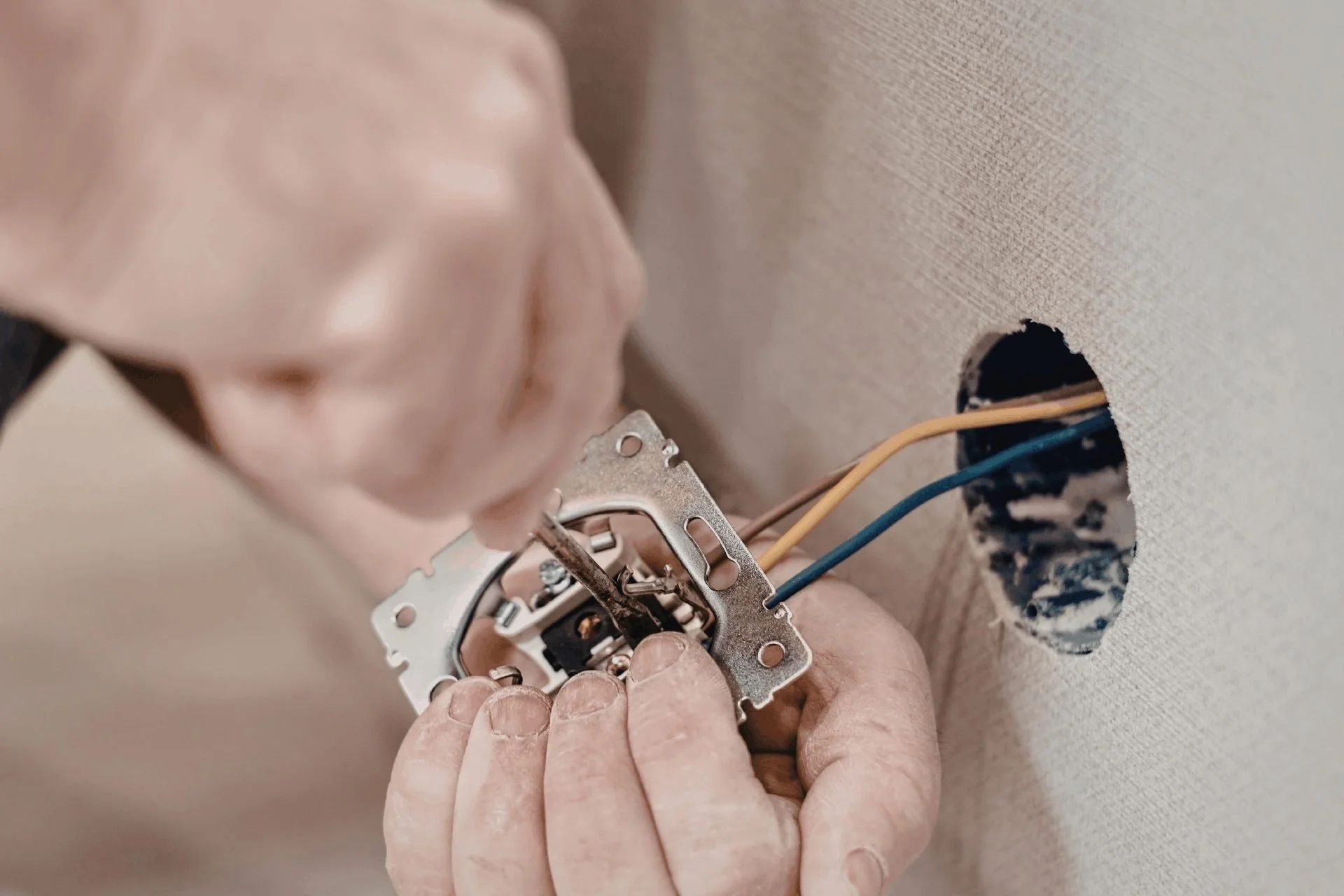
If the panel's fine, we pull the outlet and test it and the wiring with a meter. Worn contacts, a loose backstab connection, or a broken wire at the terminal are the most common findings in Columbus homes.
Repair or Replace and Verify
We fix what needs fixing, whether that's a new outlet, re-terminating a loose wire, or running a dedicated circuit, then test under load before we leave. You'll know everything works before we pack up.
When an Outlet Is a Fire Risk, Not a Nuisance
Why Columbus Homeowners Call Us Over the Competition
32 Years in This Market
We've worked in Columbus homes from the 1920s brick bungalows in German Village to the subdivisions going up right now in New Albany. Older wiring, knob-and-tube, aluminum circuits. We've seen every configuration Central Ohio houses.
4.9 Stars Across 2,962 Reviews
That's not a rounded number. That's 2,962 Columbus-area customers who left a review on Google. Technicians like Austin, Tom, and Tyson are named in those reviews by name, because they explain what they find and why.
Electrical and Plumbing Under One Call
A bathroom renovation often involves both. So does a kitchen upgrade. You don't need to coordinate two contractors when one company does both. That's the whole point of calling Safe.
The Safe Standard on Every Outlet Job
What you get every time one of our electricians shows up.
Systematic diagnosis before any parts are replaced
We don't swap outlets to see if it fixes things, we find the cause first.
Code-compliant work, Franklin County permitted when required
GFCI placement, grounding, and circuit capacity done to current Ohio code.
BBB accredited, 4.9 stars across 2,962 Google reviews
32 years of Columbus customers. The track record speaks for itself.
Outlet Repair Questions We Hear Most
What causes an electrical outlet to stop working?
Can loose outlets start a fire?
How do I know if an outlet needs repair versus full replacement?
Why do kitchens and bathrooms require GFCI outlets?
When should I upgrade to a 240V outlet?
What is the lifespan of an electrical outlet?
How much does electrical outlet repair cost?
Why do Columbus kitchens and bathrooms require GFCI outlets?
How much does electrical outlet repair cost in Columbus?
Outlet Repair Across Central Ohio
We run calls daily across the Columbus metro. Whether you're in Clintonville with a 1940s bungalow full of two-prong outlets or in a newer build in Westerville where a GFCI has failed, we know the area and we know the houses.
Our shop
3208 Morse Rd, Columbus, OH 43231
Mon–Sun: 12 AM–11:30 PM
Locations we serve 18
- ColumbusHQ
- Westerville
- Gahanna
- New Albany
- Reynoldsburg
- Worthington
- Dublin
- Powell
- Lewis Center
- Upper Arlington
- Hilliard
- Grove City
- Pickerington
- Canal Winchester
- Clintonville
- German Village
- Short North
- Pataskala
Not on the list? If you're in Central Ohio, we can get to you.
Call (614) 267-4111